Author name: mahmud09

Travelling

The Silence of the Sahara: What 72 Hours in the Dunes Taught Me About Noise

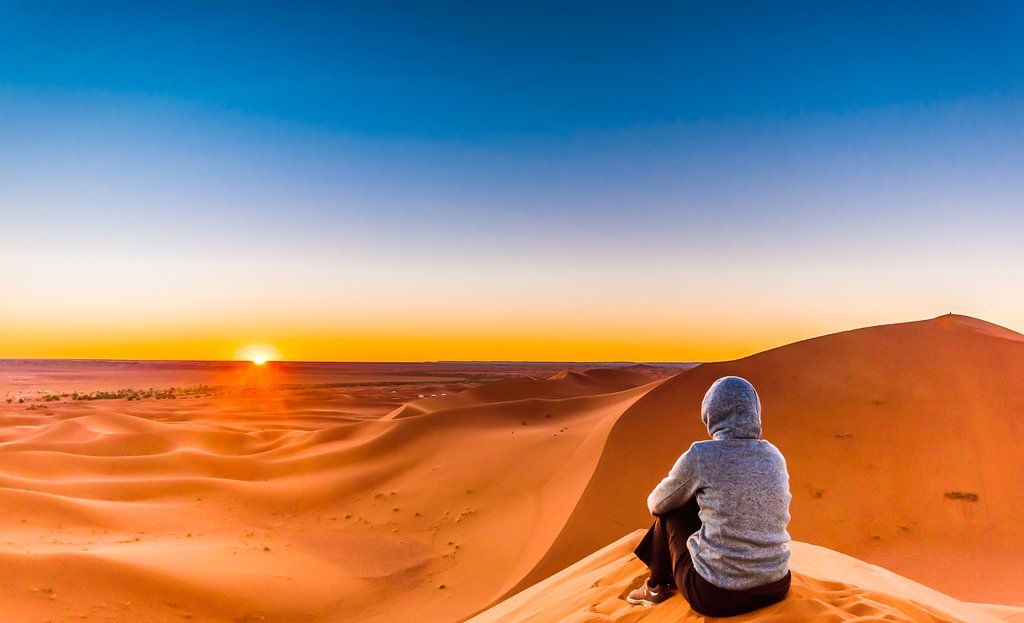
The Last Signal The “No Service” icon appeared on my phone screen somewhere between the high mountain passes of the Atlas and the red-rock valleys of the Drâa. At first, it felt like a mild itch—a reflexive urge to check an email that didn’t exist or scroll through a feed I had already seen. But as our 4×4 pushed deeper toward the edge of the Erg Chebbi dunes, that itch turned into a profound, terrifying realization: I was officially unreachable. In the modern world, we are never truly alone. We carry a pocket-sized tether to the rest of humanity at all times. We live in a constant hum of pings, vibrations, and digital demands. But as I stepped out of the vehicle and onto the cooling sands of the Sahara at dusk, the hum stopped. I didn’t find the silence I expected. I found something much heavier. I found a silence that felt like a physical weight—a silence that didn’t just exist around me, but began to seep into me. The Geography of Emptiness The Sahara is not just a desert; it is a psychological frontier. Stretching across a vast portion of Africa, it is a landscape that defies human scale. Standing at the base of a dune the size of a skyscraper, you realize that you are an ant in a cathedral of dust. The first 24 hours were the hardest. This is what I call the “Withdrawal Phase.” My brain, conditioned by years of high-speed internet and city chaos, was still searching for a “task.” I found myself checking my wrist for a watch I wasn’t wearing. I found myself mentally composing tweets about the sunset instead of actually watching it. Our guide, a man named Brahim who had been born into a nomadic family, watched me with a quiet, knowing amusement. He didn’t carry a watch. He didn’t have a GPS. He moved with a rhythmic, unhurried pace that seemed synchronized with the movement of the sun. “In the city, you have clocks,” he told me as we brewed the first of many glasses of mint tea. “In the desert, we have time.” The Sensory Reset: The Language of Sand By the second day, something shifted. When you remove the noise of engines, notifications, and chatter, your other senses begin to “wake up” to fill the void. I began to notice the sound of the wind. In the Sahara, the wind doesn’t just blow; it sings. It whistles through the sharp ridges of the dunes, creating a low, resonant drone that sounds like a cello. I began to notice the temperature of the sand—the way it stayed scorching hot an inch below the surface even as the evening air turned freezing. And then there was the light. We think we know what “red” or “gold” looks like, but the Saharan sun at 5:00 PM is a color that doesn’t exist in the city. It is a thick, syrupy amber that turns the dunes into waves of liquid fire. For the first time in my life, I wasn’t trying to capture it on a camera. I was just… letting it happen. The silence began to change from something “empty” to something “full.” It was no longer the absence of sound; it was the presence of a deep, ancient peace. Facing the Internal Noise On the second night, I walked away from our camp. I climbed a ridge of sand and sat down, facing the vast, dark expanse that stretched toward the Algerian border. When the external world goes silent, the internal world gets very loud. Without a screen to distract me, I had to face my own thoughts. I realized how much of my daily life was spent “performing”—worrying about my image, my productivity, my status. The desert doesn’t care about any of that. The sand doesn’t give you a “like.” The wind doesn’t care about your job title. I sat there for three hours. I thought about my childhood. I thought about my regrets. I thought about the people I loved and hadn’t called in months. In the silence of the Sahara, I couldn’t lie to myself. The desert acted as a mirror, reflecting back the parts of my life that were cluttered with unnecessary “noise.” It was uncomfortable. It was raw. And it was exactly what I needed. The Galaxy Above: A Lesson in Perspective If you have never seen a desert sky, you have never truly seen the stars. In our light-polluted cities, we see the “greatest hits”—the Big Dipper, Orion, perhaps a faint smudge of the Milky Way. In the Sahara, the sky is a riot. The stars don’t just sit there; they vibrate. They are so bright and so numerous that they cast shadows on the sand. Looking up, I felt a dizzying sense of “Arrival.” I realized that this was the same sky the first humans looked at. This was the sky that guided the caravans for millennia. In that moment, my “big” problems felt deliciously small. There is a great freedom in realizing your own insignificance. If the universe is this vast and this beautiful, then my failed project at work or my social anxieties are nothing more than a grain of sand in a storm. I felt a profound sense of relief. I wasn’t the center of the world, and that was the best news I’d heard in years. The Return: Bringing the Desert Home Leaving the dunes on the third day felt like waking up from a deep, restorative sleep. As we approached the first paved road, the sound of the engine felt violent. The first bar of signal on my phone felt like an intrusion. But I had changed. I realized that while I couldn’t stay in the desert forever, I could carry the “Sahara State of Mind” back with me. I learned that silence is not something you find; it is something you protect. I learned that “being busy” is often just a way of avoiding


Travelling

The Digital Nomad Blueprint: How to Work from Anywhere Without Losing Your Mind

Introduction: The Dream vs. The Reality The “laptop on the beach” photo is a lie. Sand gets in the keyboard, the sun makes the screen unreadable, and the Wi-Fi is nonexistent. Working remotely while traveling requires military-grade discipline. Finding the Perfect Base Not all cities are nomad-friendly. You need the “Nomad Trinity”: The Gear for Productivity Routine is Your Best Friend Without a 9-5 structure, it’s easy to either work 16 hours a day or not work at all. Taxes and Visas: The Boring (but Vital) Part In 2026, many countries have “Digital Nomad Visas.” Don’t work on a tourist visa if a nomad visa is available; it protects you legally and often provides tax benefits.

Travelling

The Solo Traveler’s Guide to Loneliness, Safety, and Total Freedom

Introduction: The Scary First Step “Aren’t you afraid?” That is the first question every solo traveler gets asked. The truth? Yes, we are. But fear is just excitement without breath. Solo travel is the ultimate “Coming of Age” ritual for adults. The Safety Architecture Safety isn’t about luck; it’s about systems. Solving the Loneliness Problem The paradox of solo travel is that you are rarely alone. The “Table for One” Confidence Eating alone is the final boss of solo travel. Pro tip: Bring a book or a journal. It gives you a “purpose” and makes you look like an intriguing writer rather than a lonely tourist. The Self-Discovery Aspect When you travel with others, you compromise on everything: where to eat, when to wake up, what to see. When you travel alone, you discover who you actually are when no one is watching.

Travelling

The Carry-On Only Manifesto: Pack for 3 Months in 30 Minutes

Introduction: Why Your Suitcase is a Prison Check-in fees, lost luggage, broken wheels on cobblestone streets, and the sheer weight of “stuff.” Carrying a large suitcase is the fastest way to ruin a trip. The Rule of Three You only ever need three of anything: The Fabric Revolution If you want to pack light, you must stop packing cotton. Cotton is heavy, absorbs odors, and takes forever to dry. The Tech Stack Stop carrying a laptop if you don’t work on the road. A powerful smartphone and a foldable Bluetooth keyboard can handle 90% of travel tasks. Use a “GaN” charger—a tiny block that can charge your phone, laptop, and headphones simultaneously. The Packing Cube System Think of packing cubes as “drawers” for your backpack. Toiletries: The “Solid” Secret Liquids are the enemy of carry-on travel. Switch to solid shampoo bars, solid deodorant, and toothpaste tabs. You’ll never have to pull out a plastic bag at security again. Conclusion: The Lightness of Being When you can walk off a plane and straight into the city without waiting at a baggage carousel, you feel like a superhero. You are mobile. You are free.

Travelling

The $50-a-Day Global Blueprint: How to Travel the World When You’re Not Rich

Introduction: The Great Travel Lie The travel industry wants you to believe that “real” travel requires a luxury budget. They want you to buy the $400-a-night hotel and the $150 guided bus tour. I am here to tell you that the most rewarding travel happens when you are forced to be scrappy. The Math of the Shoestring Budget To travel for $50 a day, you have to master the “Big Three”: Transport, Accommodation, and Food. 1. Strategic Flight Hacking Stop using Google Flights the wrong way. Use the “Everywhere” feature on Skyscanner. Instead of picking a destination and finding a price, pick a price and find a destination. 2. The New Frontier of Lodging Hostels are great, but have you tried House Sitting? Platforms like TrustedHousesitters allow you to stay in luxury homes for free in exchange for feeding a cat or watering plants. 3. Eating Like a King on a Peasant’s Budget If you eat three meals a day at restaurants, your budget is dead. The Hidden Costs: Slowing Down to Save Money The faster you move, the more you spend. Transport is expensive. If you spend two weeks in one region of Vietnam instead of trying to see the whole country, you save hundreds on flights and trains. Conclusion: Freedom Over Luxury Budget travel isn’t about deprivation; it’s about prioritization. Would you rather have one week in a 5-star hotel, or six months of freedom on the road?

Travelling

The Art of the “Invisible” Traveler: 10 Secrets to Blending In and Staying Safe Anywhere

Introduction: The “Target” on Your Back We’ve all seen them: the traveler standing in the middle of a busy Roman piazza, draped in expensive gear, staring at a giant paper map, looking utterly overwhelmed. In the travel world, this is known as “The Beacon.” You are signaling to every pickpocket, scam artist, and overpriced “tourist trap” owner that you are a prime target. But what if you could move through a city like a ghost? What if you could experience Paris, Cairo, or Tokyo not as a spectator, but as a part of the landscape? This is the art of “Invisible Travel.” Over the next 1,500 words, we are going to deconstruct the psychology of the tourist and rebuild you into a savvy, blended-in traveler. The Psychology of Dress: Beyond the Zip-Off Cargo Pants The first mistake travelers make is dressing for a safari when they are going to a metropolitan city. Unless you are actually hiking the Andes, you don’t need technical gear. In Europe, people dress “smart-casual.” Mastering the “Walk”: The Body Language of a Local Locals walk with purpose. They know where they are going. Even if you are hopelessly lost, never stop in the middle of the sidewalk to check your phone. Duck into a cafe, order an espresso, and check your map there. The Digital Ghost: Tech Safety In 2026, your greatest vulnerability isn’t your wallet; it’s your data. Cultural Intelligence (CQ) Blending in isn’t just about clothes; it’s about volume. Americans and Australians are often identified by their voice volume. Lower your decibels. Observe how locals interact at a market. Do they haggle? Do they point? Mimicry is the highest form of safety. Conclusion: The Reward of Invisibility When you stop looking like a dollar sign, the world opens up. Locals are more likely to strike up a genuine conversation, and you’ll find yourself invited into the “real” version of the country you came to see.

Scroll to Top